
What palliative care at home looks like for serious illness

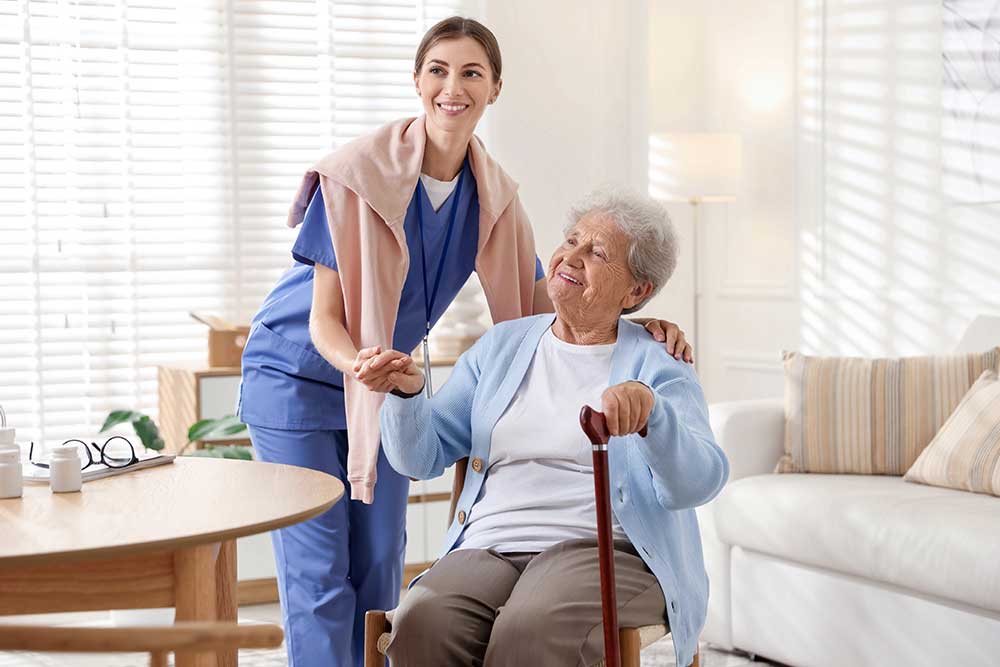
When someone you love is living with a serious illness – cancer, heart failure, advanced dementia – the focus of care often shifts. Comfort, dignity, and quality of daily life become the priority alongside, or sometimes instead of, curative treatment. For many families, this shift raises an immediate practical question: what does that actually look like at home, day to day?
This article explains what palliative care at home involves in practice, what a non-medical caregiver contributes within that picture, and how families can begin putting the right support in place.
What palliative care at home actually means
Palliative care is specialized support focused on comfort, symptom relief, and quality of life for people living with serious illness. Unlike hospice, it is not limited to end of life – it can begin at any stage of a diagnosis and run alongside active treatment.
At home, palliative care is typically delivered by a team: physicians or nurse practitioners who manage symptoms and medications, social workers who address emotional and logistical needs, chaplains who provide spiritual support, and home caregivers who handle the daily personal and practical tasks that make staying home possible.
Palliative care vs hospice: a key difference families often miss
These terms are often used interchangeably, but they are not the same. Palliative care is appropriate at any point after a serious diagnosis and does not require a person to stop pursuing curative or life-prolonging treatment. Hospice is a specific type of palliative care for people who are no longer pursuing curative treatment and whose prognosis is generally six months or less.
A family dealing with a cancer diagnosis mid-treatment may benefit enormously from palliative support – managing fatigue, nausea, and daily function – without being anywhere near the end of life. For more on how hospice specifically supports families through later stages, see our article on how hospice care supports the whole family.
What non-medical home caregivers do within a palliative care plan
Non-medical caregivers are not nurses or clinicians – and that boundary is important to understand clearly. They do not administer medication, manage wounds, or make clinical decisions. Those responsibilities belong to licensed medical providers.
What non-medical caregivers do is handle the layer of support that falls between clinical visits: personal care, meal preparation, mobility assistance, light housekeeping, and companionship. For someone whose energy is limited by illness, or whose family is exhausted from months of caregiving, this layer is often what makes remaining at home sustainable.
Which serious illnesses most often call for home-based palliative support
Cancer and treatment side effects
People undergoing cancer treatment – or living with advanced cancer – frequently face profound fatigue, nausea, pain, and reduced mobility. A non-medical caregiver helps maintain daily routines during treatment cycles: preparing meals that match dietary needs, assisting with bathing on difficult days, providing steady company during long hours at home. Between clinical visits, a caregiver also serves as an extra set of eyes, able to communicate changes in the person’s condition to family or the medical team.
Heart failure, COPD, and respiratory conditions
Chronic heart failure and COPD progressively limit a person’s ability to perform basic tasks without breathlessness or fatigue. Activities that once took minutes – bathing, walking to the kitchen, getting dressed – become effortful and risky. A caregiver provides hands-on assistance with these tasks, reduces exertion, and helps the person conserve energy for what matters most to them.
Advanced dementia and neurological conditions
Advanced dementia and conditions like Parkinson’s or ALS raise a distinct set of daily challenges – unpredictable behavior, swallowing difficulties, significant mobility dependence, and profound communication changes. Non-medical caregivers working with this population offer patient, consistent support grounded in familiarity with the person’s routines, preferences, and communication patterns. Learn more about specialty care for complex needs.
What the daily reality of palliative home support looks like
Comfort-focused personal care and daily routines
For someone managing a serious illness, the basics of personal care – bathing, grooming, dressing, toileting – can be physically taxing and emotionally delicate. A good caregiver adapts these routines to the person’s current capacity: moving at their pace, preserving privacy and dignity, and making adjustments on difficult days without fuss. The goal is not efficiency – it is comfort and a sense of normalcy in circumstances that can feel anything but normal.
Companionship and emotional presence for the patient
Serious illness is isolating. Clinical appointments are brief, family members are stretched, and long stretches of the day can pass in silence. A caregiver who genuinely engages – through conversation, reading aloud, sharing a meal, watching something together – provides something that no clinical visit can: sustained human presence. For many palliative clients, this companionship is among the most valued parts of home-based support.
Practical help so family caregivers can rest
Family members often carry an invisible and unsustainable load during a loved one’s illness – managing medications, attending appointments, handling household tasks, and providing hands-on care, often while working and raising children. A non-medical caregiver provides structured respite: time when the family member can genuinely step away, sleep, or attend to their own health. This is not a luxury – caregiver burnout is one of the most common reasons home-based care arrangements break down. Our article on how respite care helps tired family caregivers explores this in more depth.
Who is typically on a palliative care team and where home caregivers fit
A home-based palliative care team usually includes a physician or advanced practice nurse who oversees symptom management, a nurse who conducts regular home visits, a social worker who helps navigate logistics and emotional challenges, and often a chaplain or counselor. Hospice teams are structured similarly.
A non-medical home caregiver is a consistent daily presence within this wider structure. They are not part of the clinical team, but they are often the person who knows the patient’s daily rhythms most intimately – which matters when communicating with family or flagging a change worth reporting to the nurse.
How families can prepare the home for palliative care
A few practical steps make a significant difference before in-home palliative support begins. Arrange bedroom furniture to allow easy caregiver access on both sides of the bed. Ensure the bathroom has grab bars and a shower chair if mobility is limited. Centralize medications clearly labeled where the nursing team can review them easily. Prepare a brief written summary of the person’s daily preferences, communication style, and what matters most to them – this helps a new caregiver build rapport quickly. Discuss with the medical team which symptoms to watch for and what threshold warrants a call.
Starting in-home palliative support in the Bay Area
Care for Seniors provides non-medical in-home support for families navigating serious illness across the Bay Area. Our caregivers work alongside palliative and hospice teams, handling personal care, meals, companionship, and light household tasks – the daily layer that sustains comfort between clinical visits. Hours can be adjusted as the patient’s condition changes, and arrangements can begin quickly after an initial conversation. Families managing care from a distance are welcome to contact us directly to coordinate.
Conclusion
Palliative care at home is not a single service – it is a team effort, with different providers contributing what they do best. Non-medical home caregivers fill a specific and essential role: the daily presence, the personal care, the steady companionship, and the relief that lets family members breathe. If you are researching options for a loved one with a serious illness, understanding what each part of the team does – and what falls to whom – is the clearest first step toward building a plan that actually holds.

Related posts



Popular Posts


Testimonials
I was extremely pleased with the in-home care I received from your employee, Zanaida Beltran. Zenaida is a highly competent caregiver who is very instrumental in fulfilling my needs after I suffered a fractured pelvis. At all times she was prompt in arriving, knew how to perform her duties intelligently and did all with a most pleasant manner. Zenaida anticipated what was necessary and went beyond normal circumstances making my surrounding appropriately safe and clean. She also made sure that I followed the instructions of my doctors and physiotherapist. Upon accompanying me to appointments, she assisted with all transfers from car or cab. I felt confidant-having Zenaida with me. I am positive that Zenaida’s help during the first days of my confinement has been instrumental in my eventually achieving a full recovery from my accident. Thank you for sending such a valuable caregiver.

I wanted to put in writing what a lifesaver Care for Seniors was for us. My husband and I found ourselves in the unexpected situation for both being in the hospital at the same time. Len was going to be released before me but still needed a caregiver when he arrived home. I was not going to be home for a few days but I was also going to need help recovering from my chemotherapy treatment. It was 3:00pm in the afternoon when the agency was contacted and amazingly they were able to get us a live in caregiver by 6:00pm that same day. I shudder when I think back on that day and how vulnerable and helpless I felt. Thanks to you, Alla and Care for Seniors staff, our needs were met with compassion and understanding. Thank you so much! It’s comforting to know that we seniors have a safe and reliable place to turn for help.

I am so grateful for all your services. My mother was cared for with compassion, attention, dignity, and integrity. A special commendation is deserved by Maria Regina Garcia. Gina went way above her responsibilities in caring for my mother. My mother grew to love her. I frequently observed Gina holding my mother’s hand and stroking her hair. In the hours immediately prior to my mother’s death on July 19th 2009, Gina sat with her through the night ensuring that at every stage in the process, my mother would be comfortable. My cousin who shared some time with her that evening told me that Gina was caring and tearful, two attributes for which Gina is to be treasured. Living so far from my mother, it was always my intent that she not die alone or in pain. To some extent, my cousins in the Bay Area assisted with that. However, Gina ensured that my mother’s last few months would be shared with an attentive, compassionate, and caring individual. Within minutes of my mother’s death, Gina called me here in Georgia to notify me. Gina stayed with my mother until my mother was transported from Rhoda Goldman Plaza. I will always remember the service of your caregivers, but particularly Gina. You should consider her a treasured asset.

Thank you so much for your help and support during Joe’s ordeal. You couldn’t have helped more, and your energetic and cheerful presence was an added comfort. I am recommending Care for Seniors to SF Village very highly. I hope we cross paths again in happier times.

I wanted to express my appreciation for the excellent service you provided in helping my mother during the past two years. You and your office staff were always available and wonderfully responsive to last minute changes and emergencies as they arose. Your Caregivers were sensitive and competent, especially considering my mother’s many special requirements. She was very pleased with their effort, ability and affection. I can strongly recommend Care for Seniors as a reliable, competent and effective service in caring for the elderly. Best wishes to you and all your Staff.

I want to thank you and all your staff for your care for Bob and being so responsive and helpful. I would gladly recommend Care for Seniors to any families who want kind and caring support for their loved ones.

I wanted to express my appreciation for the excellent service you provided in helping my mother..

I want to thank you and all your staff for your care for Bob and being so responsive and helpful..
I wanted to put in writing what a lifesaver Care for Seniors was for us. My husband and I found ourselves..